
Quick Summary
The F48 ranks first for its mature engineering, established service record, and generally predictable ownership needs. The newer U11 shows encouraging potential, although more long term data is needed, while the aging E84 carries greater exposure to mechanical wear. Maintenance records, recall completion, previous repairs, and a professional inspection remain central when evaluating any used BMW X1.
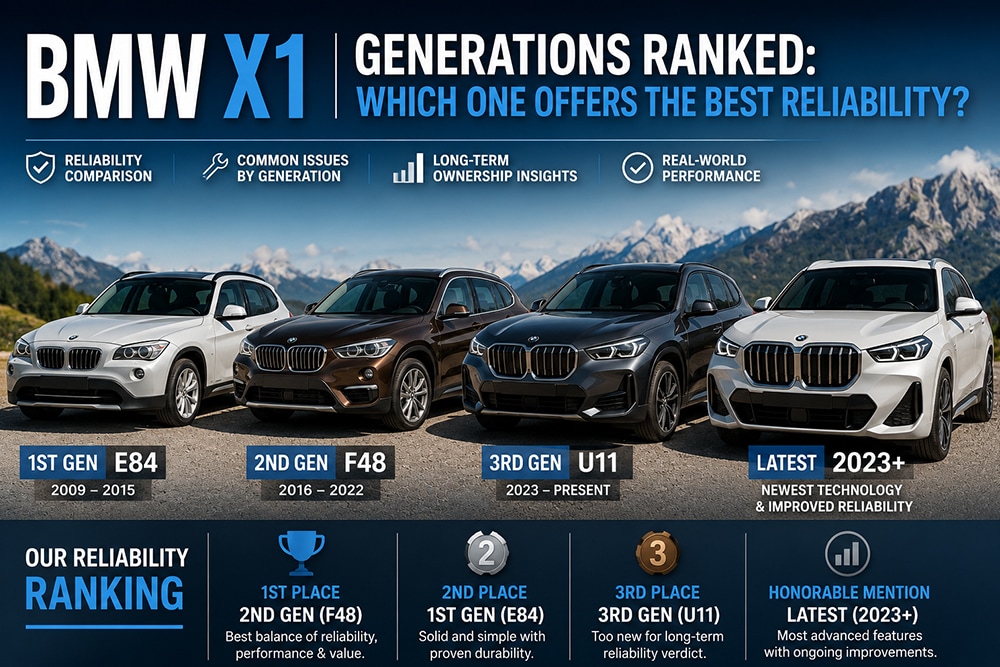
Since its United States debut for the 2013 model year, the BMW X1 has evolved through three distinct generations, each shaped by different engineering priorities, powertrains, and ownership expectations. These changes have influenced BMW X1 reliability in ways that are difficult to judge from age or mileage alone. Earlier models offer a more traditional driving character, while later versions place greater emphasis on space, technology, and everyday comfort. Service history, component design, and production updates all affect long term dependability.
Let’s examine how those differences shape the strongest choice today.
How We Ranked the BMW X1 Generations
Our ranking weighs recurring mechanical concerns, engine and transmission history, recall activity, age related wear, and the depth of long term ownership evidence available for each generation. We also consider how often specific faults appear, how complex those repairs may be, and how clearly service records confirm care. A recall does not automatically define an entire generation as unreliable. In the same way, a strong owner score cannot replace a complete inspection. Mileage, climate exposure, accident history, and maintenance quality can change the condition of two otherwise similar vehicles. This approach keeps the comparison measured, practical, and useful for owners.
Third Place: First Generation BMW X1 E84
Sold in the United States from 2013 through 2015, the first generation E84 carries a distinct rear wheel drive based character and compact proportions. Its available N20 four cylinder engine delivered strong performance, yet certain examples developed timing chain and oil pump drive chain concerns. The N55 six cylinder in the xDrive35i avoids that issue, though age can expose cooling system wear, gasket leaks, charge pipe deterioration, and fuel system repairs. xDrive components may also need attention as mileage rises. The E84 remains appealing for its direct steering feel and traditional BMW personality. Its compact dimensions suit drivers who prefer an intimate cabin and responsive road manners, although age and overall repair exposure place it third in this reliability comparison.
Second Place: Third Generation BMW X1 U11
Introduced for the 2023 model year, the U11 represents the newest stage of X1 development. It offers a larger cabin, digital features, updated chassis engineering, and a later version of BMW’s turbocharged four cylinder engine family. Its newer construction reduces immediate exposure to age related seals, hoses, mounts, and suspension wear. Early recall activity, including campaigns involving integrated brake system components on certain vehicles, still deserves careful VIN level review, while the limitation is time. Even the earliest U11 examples have not accumulated the same high mileage history as older generations, and its engineering foundation appears promising, yet a limited ownership record makes a definitive long term judgment premature. For now, the U11 takes second place, supported by modern design while awaiting a broader record of durability across varied climates, mileage levels, and service histories.
First Place: Second Generation BMW X1 F48
The BMW X1 F48, sold from 2016 through 2022, offers the strongest reliability case among the three generations. Its B46 related four cylinder engine family has shown a more settled ownership record than the earlier N20. The generation also benefits from years of service data, broader high mileage experience, and mature production updates. Possible concerns include coolant loss, engine mount wear, oil leaks, suspension wear, and rear differential service on xDrive models. These items still require professional attention, though they are generally more predictable than the timing chain risk linked to certain earlier vehicles. For used buyers, the F48 presents clear balance.
Which BMW X1 Model Years Deserve the Closest Look?
Later F48 examples deserve consideration, with 2020 and 2021 models offering a combination of maturity and data. A documented 2022 vehicle may also appeal as the final model year of the generation. No production year should be treated as completely fault free. Service records, recall completion, mileage, accident history, and repair quality remain central to any decision. A higher mileage X1 with consistent care may present a stronger prospect than a lower mileage example with missing records or irregular maintenance.
Reliability Depends on More Than the Generation
Generation rankings offer a helpful starting point, though each vehicle carries its own history. Driving conditions, climate exposure, service intervals, previous repairs, and ownership habits shape long term dependability. Two X1 models from the same year can differ considerably. Before purchasing, arrange a professional inspection with BMW trained technicians who can review the powertrain, cooling system, suspension, electronics, recalls, and service records with diagnostic equipment.
Which BMW X1 Generation Inspires the Most Confidence?
The F48 earns the strongest recommendation for dependable ownership, supported by a mature powertrain, extensive service history, and repair patterns that are generally understood. Its standing still depends on documented care, thoughtful inspection, and the condition of the individual vehicle. Newer engineering may appear reassuring, yet long term evidence takes time to develop. A well maintained X1 with complete records will often inspire greater confidence than age or mileage alone.
At BMW Cleveland, we can help you compare new, BMW Certified Pre Owned, and pre owned X1 models with attentive guidance. Our Client Advisors take time to understand your driving habits, space requirements, and ownership priorities before discussing suitable options. Our BMW trained technicians can inspect and maintain your X1 with factory specific knowledge, while our parts specialists can assist with Original BMW components and accessories.
Explore our current BMW X1 selection or schedule a visit to experience the Davis Difference with confidence and ease.
FAQs
Which BMW X1 generation is considered the most reliable?
The F48, sold from 2016 through 2022, offers the strongest overall reliability case. It has a mature engine platform, extensive service history, and more established repair patterns than the newer U11. Its condition still depends on maintenance records, mileage, previous repairs, and a professional inspection before purchase.
Which BMW X1 model years deserve the closest look?
The 2020 and 2021 BMW X1 models deserve close attention due to their mature F48 engineering and available ownership data. A well documented 2022 model may also be appealing. Buyers should compare maintenance history, recall completion, accident records, mileage, and current mechanical condition rather than choosing by model year alone.
Is the newest BMW X1 generation reliable?
The U11 appears promising due to its newer engineering and reduced exposure to age related wear. However, it has not accumulated enough high mileage ownership history for a firm long term verdict. A current generation X1 should still receive regular professional service and a VIN review for any outstanding recall work.